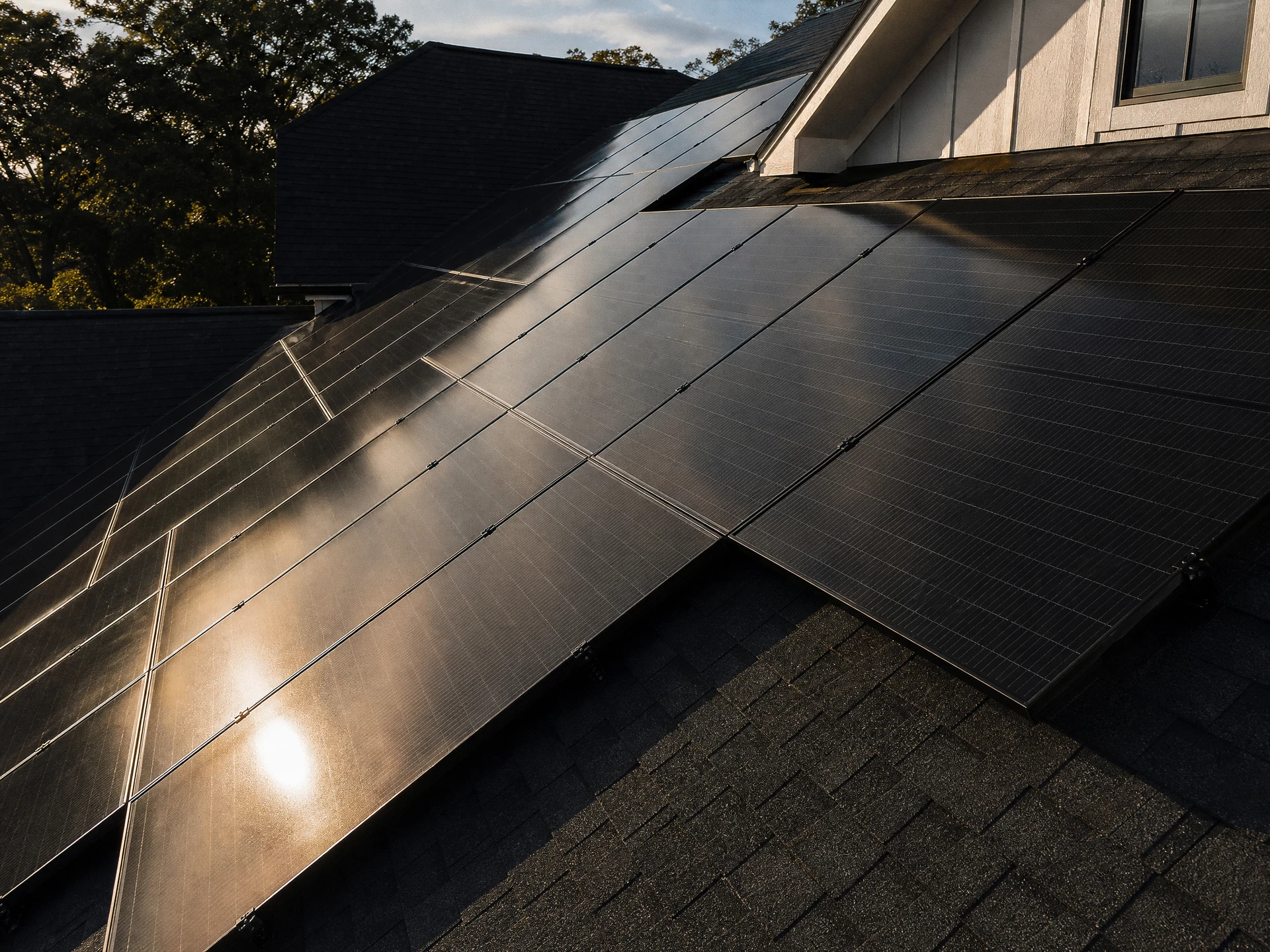
Solar & Batteries
Rooftop photovoltaic design, battery backup storage, and installation integrated with the roof assembly by the same crew that warranties it.
What we do and how
Quick Answer
Sentinel Home Solutions is a veteran owned contractor providing solar and battery storage services across the South Carolina Upstate from its base in 151 Glenwood Ln, Gray Court, SC 29645. Rooftop photovoltaic design, battery backup storage, and installation integrated with the roof assembly by the same crew that warranties it. Typical duration is 2 – 4 days on site, work is quoted from a written line-item scope, and the initial site assessment is free.
Most solar problems are roofing problems. Panels get mounted by a crew that does not own the roof, penetrations get sealed with caulk instead of flashed, and three years later the homeowner has a leak with two companies pointing at each other. We do both, so every mount is flashed into the roof assembly and one company holds the warranty. We also tell you plainly when a roof is too near the end of its service life to carry an array, and what it costs to handle both at once. On the storage side we size batteries around the circuits you actually need during an outage rather than selling you a whole-house promise the system cannot keep, and we can add storage to an array we did not install.
Line Items
Every mount is a hole in your roof, and every battery is a promise about an outage. We own both, because we warranty the roof underneath and the circuits behind it.
Most solar problems are roofing problems
Panels rarely fail. What fails is the connection between the array and the roof it is bolted to, and the split responsibility that follows. A solar company mounts on someone else's roof, a leak shows up three years later, and the homeowner is holding two warranties that each point at the other.
What We Find Most Often
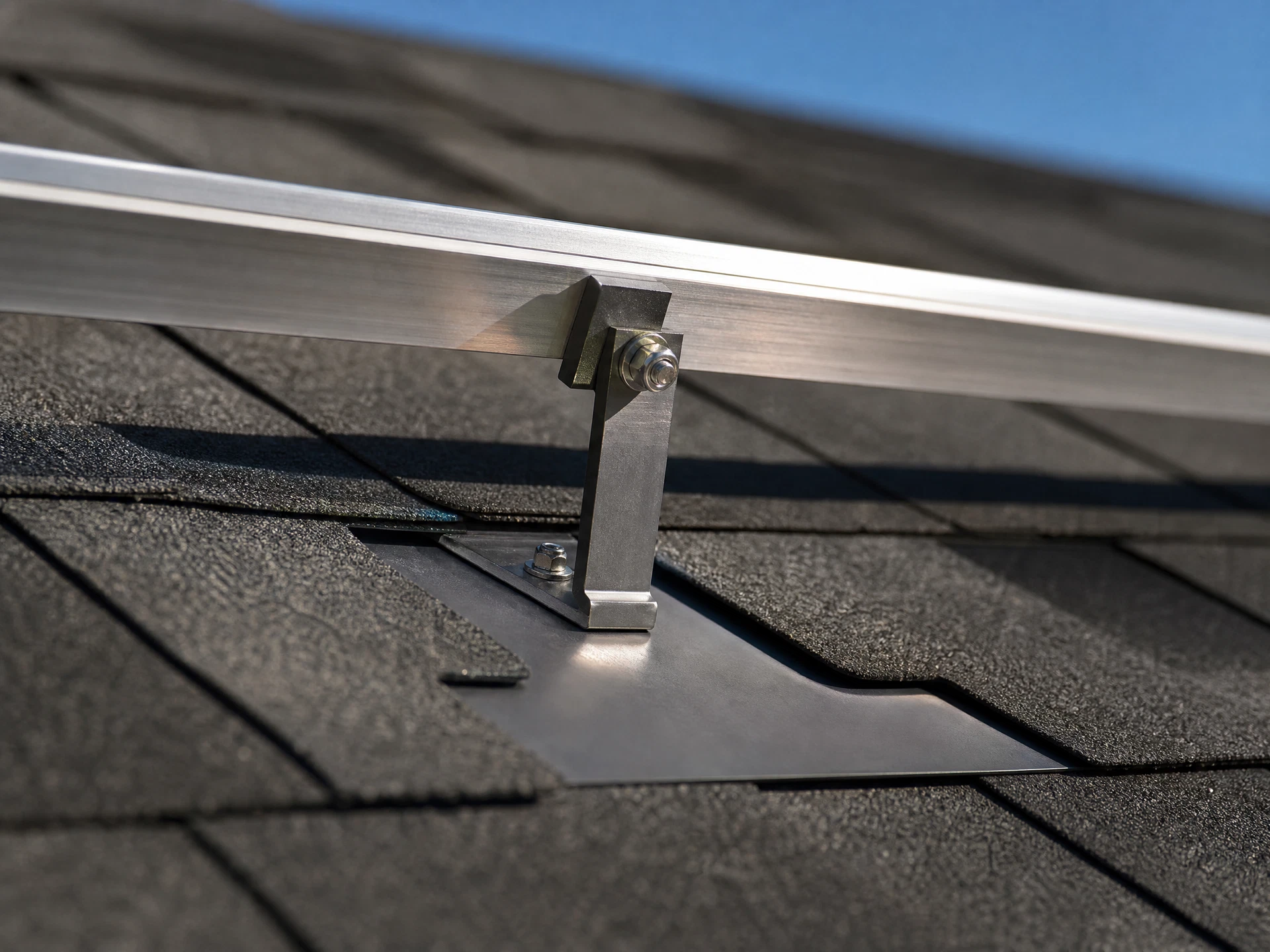
Mounts sealed instead of flashed
A bead of sealant under a bracket has a service life of a few years. The array above it lasts decades. That mismatch is the single most common source of solar leaks.
Array installed on an aging roof
Mounting on a roof with under ten years left guarantees paying to remove and reset the array later, which buys you nothing at all.
Production modeled optimistically
Shade from trees that will keep growing gets discounted in the model, and the system underperforms the projection the homeowner based the decision on.
Nobody owns the penetration
When the roofer and the solar installer are different companies, the flashing detail belongs to neither, and the homeowner absorbs the dispute.
Batteries sold on a whole-house promise
A single battery cannot usually run central air, an electric range, and a water heater at once. Sold without a critical load panel, the homeowner discovers the real limit during the first outage.
How a solar and battery storage project runs
Every stage is documented. You are never guessing what happened on a day you were not home.
Roof condition first
Before we model anything, we determine remaining roof life. If it is under roughly ten years, we tell you to sequence the roof first, even though that is the slower sale.
Site assessment and shade analysis
Roof planes, azimuth, pitch, and actual shading measured on site, including trees that will be larger in five years.
Consumption-based sizing
Sized against twelve months of your real usage rather than a national average, with a production model we will walk you through line by line.
Permitting and interconnection
We handle the permit set and the utility interconnection application, and we tell you honestly what the current timeline looks like.
Flashed structural mounting
Mounts land on structure, not just decking, and every penetration is flashed into the roof assembly with a metal flashing woven under the course above it.
Electrical, storage, and monitoring
Inverter, disconnects, and monitoring installed and labeled to code. Where storage is in scope, the battery is set with a critical load panel so you know exactly which circuits stay live.
Commissioning and outage test
System commissioned and production verified against the model. On battery systems we physically pull the grid and let you watch what stays on, so the backup is proven rather than promised.
System and storage configurations
Solar and storage answer two different questions. Panels lower a bill; batteries keep specific circuits alive. The honest framing is what each configuration does and does not do for you.
Grid-tied, no battery
The lowest cost per watt and the fastest payback. It does not keep your lights on in an outage, because it shuts down for utility safety.
Partial home battery backup
One battery feeding a critical load panel: refrigerator, well pump, internet, lights, and select outlets. The configuration that actually matches what one battery can deliver.
Whole home backup, multi-battery
Two or more batteries sized to carry HVAC and large appliances. Costs substantially more and requires a load study, but it is the only honest way to promise the house keeps running.
Storage retrofit to existing array
Adding a battery to panels someone else installed. Feasibility depends on your inverter, so we inspect before quoting rather than after.
Roof-integrated on new roof
Array planned while the roof is being replaced, so blocking and flashing are designed in rather than retrofitted. The cleanest install we can produce.
Standing seam metal mounting
Clamps to the seam with no roof penetration at all, and the roof and array share a service life. The best long-term pairing available.
Ground mount
For properties where the roof is shaded or oriented poorly. Costs more in racking and trenching but sidesteps roof penetration entirely.
What determines the price of solar and storage
Solar is quoted on system size, but the number you pay is driven by what your specific roof and electrical service require. Be especially careful comparing quotes that lead with a monthly payment instead of a price.
Why We Do Not List Prices
A price on a website is a guess about a house nobody has looked at. We would rather tell you what moves the number, then measure your house and put a fixed figure in writing. The assessment is free and there is no obligation attached to it.
What Moves Your Number
- 01
- Sizing starts with twelve months of power bills, not the roof area available. An oversized array sold on projected savings is the most common way homeowners overpay.
- 02
- A shaded roof needs either higher-efficiency panels or more of them to hit the same production, and sometimes optimizers per panel. Shade analysis should precede any quote.
- 03
- Panels last decades. If the roof underneath has under ten years left, removing and reinstalling the array later is a real cost that belongs in the decision now.
- 04
- A single battery on a critical load panel and multi-battery whole-home backup are very different projects. What you want backed up during an outage drives this more than anything else.
- 05
- An older or full main panel may need upgrading before it can accept solar or storage. This is a real line item and should never appear as a surprise.
- 06
- Adding storage to an existing array depends on the inverter already installed. Some accept a battery directly, others require AC coupling or an inverter replacement.
- 07
- Federal and state incentives depend on your tax situation, not ours. We show pricing before incentives and tell you to confirm eligibility with your tax preparer.
System size, driven by your actual usage
Shading and panel efficiency required
Roof age and whether it should be replaced first
Battery backup scope
Electrical service and panel condition
Battery retrofit compatibility
Incentive eligibility, which we do not guarantee
Your written scope carries a fixed line-item price. If something is not on the scope, it is not in the price, and we tell you that before you sign.
What is included, and what is not
Included In Scope
- Twelve month consumption analysis
- On-site shade analysis and production model
- Roof condition assessment before design
- Permit set and submission
- Utility interconnection application
- Structural attachment with flashed penetrations
- Inverter, disconnects, and code labeling
- Critical load panel and circuit list on battery systems
- Documented outage test before handoff
- Monitoring setup and walkthrough
- Commissioning with verified production
Not Included
- Roof replacement, quoted separately when remaining life requires it
- Main panel upgrades if your service cannot support the system, quoted after review
- Tree removal or trimming
- Utility-side equipment and meter changes controlled by the utility
- Any claim about specific tax credit eligibility, which is between you and your tax professional
Exclusions are listed on your written scope with pricing attached where they are likely to come up, so a discovery is never a negotiation.
Accountability
Workmanship
Written, transferable
Roof Penetrations
Covered by us, not split
Battery Equipment
Manufacturer terms
Production
Verified at commissioning
Solar & Batteries questions we get asked
If your question is not here, ask it on the intake form below and we will answer it directly rather than sending a brochure.
Is solar actually worth it in South Carolina?
It depends on your bill, your roof orientation, and how long you will stay. With a large summer bill, unshaded south or west exposure, and a ten year horizon, the numbers usually work. With a small bill and a heavily shaded roof, they often do not, and we will say so.
What happens to my panels when I need a new roof?
They have to come off and go back on, which is a substantial cost that produces no additional power. That is exactly why we assess roof life before designing an array, and why we recommend sequencing the roof first when it has under ten years left.
Will solar power my house during an outage?
Not without a battery. A standard grid-tied system shuts down in an outage for utility worker safety. If backup power is your goal, that has to be designed in from the start with a battery and a critical load panel.
How many circuits will one battery actually run?
Realistically a refrigerator, internet and networking, lighting, select outlets, and a well pump for most of a day, longer if the sun is recharging it. Central air conditioning is the line most single-battery systems cannot cross, which is why we build a written circuit list into the design instead of promising the whole house.
Can you add a battery to solar panels another company installed?
Usually yes, and we do it regularly. It depends on your existing inverter, because some string inverters require either an AC coupled battery or an inverter replacement to accept storage. We inspect the existing equipment and give you the feasible options with pricing before you commit to anything.
Do you guarantee the production numbers?
We verify actual production against the model at commissioning and hand you monitoring so you can watch it yourself. We do not guarantee future weather, and any company that does is selling something other than engineering.
Roofing
Replacement, repair, storm response
02Exteriors
Siding, trim, soffit, gutters
03Windows
Replacement, glass upgrades, flashing
05HVAC
Install, replace, service, maintain
06Standby Generators
Whole-home backup, installed and tested
07Custom Home Building
New homes built on your lot
08Remodeling & Additions
Kitchens, baths, additions, renovation
Solar and battery assessment request
Your recent power bills and the age of your roof determine most of this. Have a bill handy if you can.
Existing Array Leaking
If you already have panels and you are seeing a ceiling stain, call. Most solar leaks are unflashed mounts and they get worse each rain.
(864) 593-8773Get it looked at
before it spreads.
Tell us what the house is doing and we will come look at it. The assessment is free, the findings come to you in writing, and there is no obligation attached to either one.