Exteriors
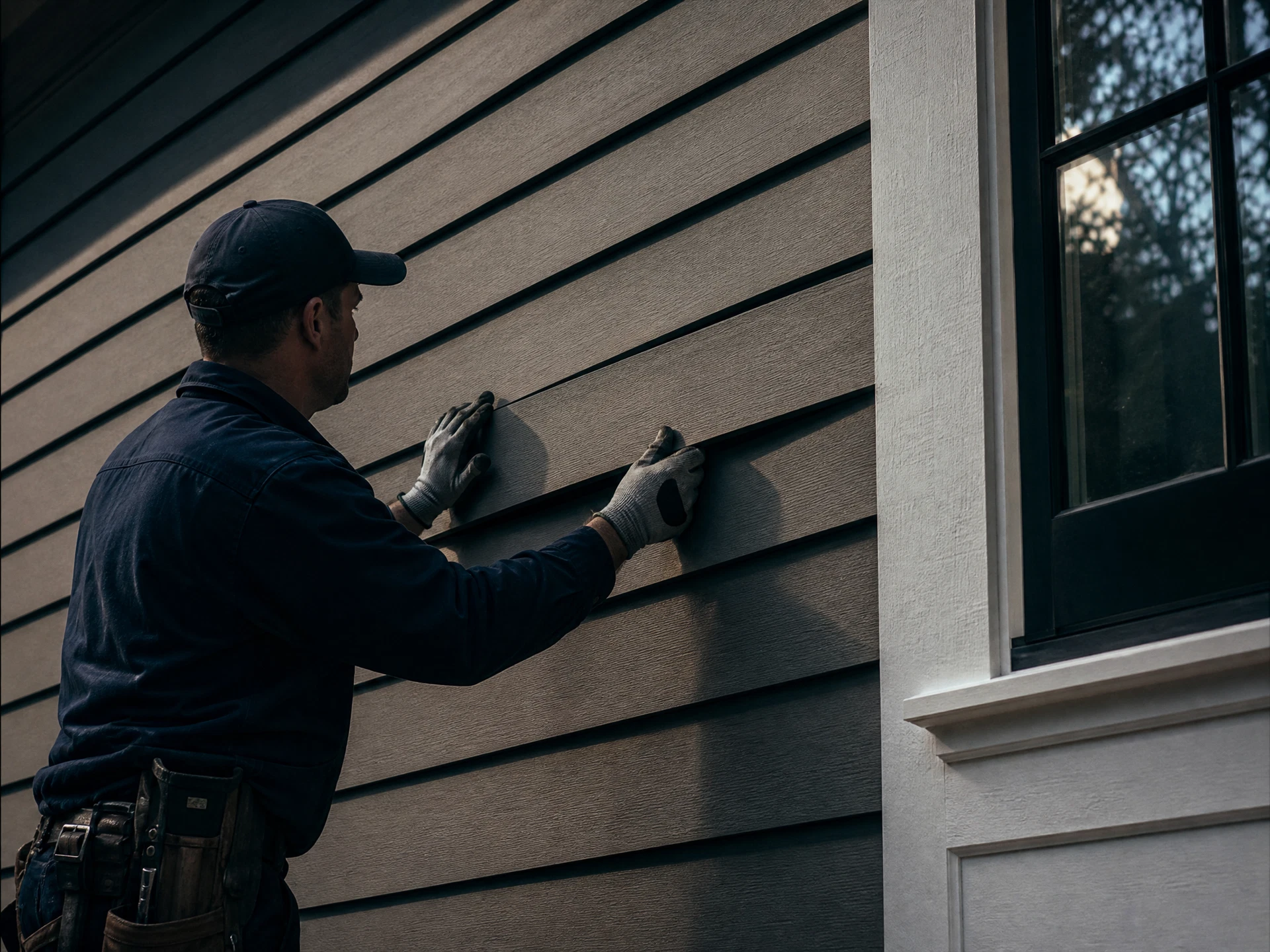
Siding, trim, soffit, and gutter systems installed as one continuous weather barrier instead of unrelated parts.
What we do and how
Quick Answer
Sentinel Home Solutions is a veteran owned contractor providing exterior services across the South Carolina Upstate from its base in 151 Glenwood Ln, Gray Court, SC 29645. Siding, trim, soffit, and gutter systems installed as one continuous weather barrier instead of unrelated parts. Typical duration is 3 – 10 days, work is quoted from a written line-item scope, and the initial site assessment is free.
The exterior of a home is a system, and water finds the seam between trades. Because we handle roofing, siding, windows, and gutters under one contract, the flashing details where those assemblies meet are our responsibility rather than a dispute between subcontractors. We correct improper housewrap laps and missing kick-out flashing as part of the scope, not as a change order, because those two details cause the majority of the wall rot we open up on repair calls.
Line Items
Water finds the seam between trades. Because roofing, siding, and gutters are all ours, the seams are ours too.
The exterior is one system, not four products
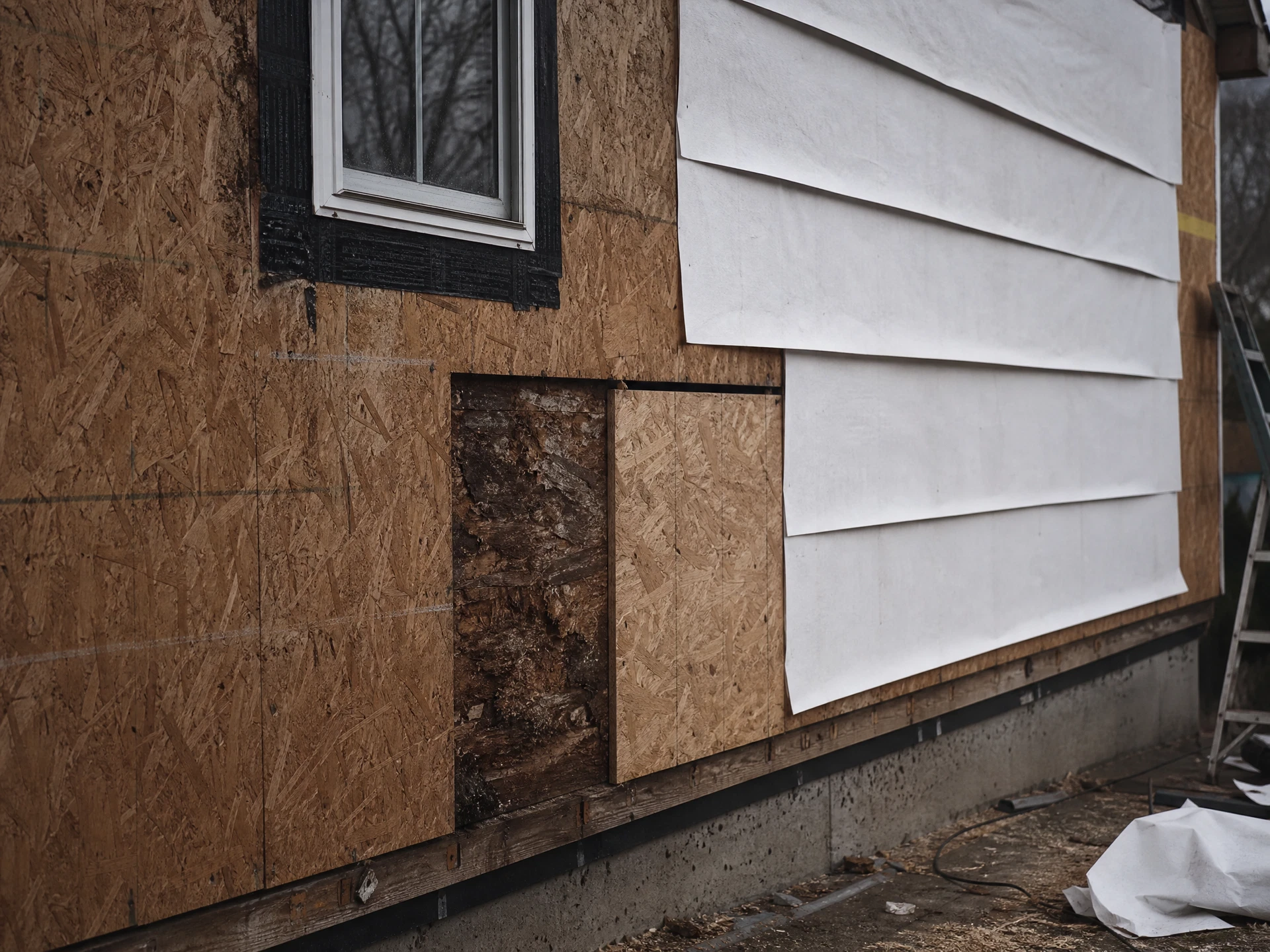
Most exterior failures happen at transitions: roof to wall, siding to window, gutter to fascia. When those transitions are split across three subcontractors, nobody owns the detail where they meet, and the homeowner discovers the gap years later as soft sheathing. Every wall we open up during a siding replacement tells the same story.
What We Find Most Often
Housewrap lapped backward
Upper courses tucked behind lower ones so the wrap channels water into the wall instead of shedding it out. It is invisible once siding is on and it is remarkably common.
Caulk used as flashing
Window heads sealed with a bead of caulk instead of a drip cap and flashing tape. Caulk fails, and the water goes straight into the rough opening.
Siding installed tight to the deck
Panels run hard into deck ledgers and horizontal surfaces with no clearance, holding moisture against the wall permanently.
Undersized or misgraded gutters
Gutters that cannot carry the roof area, or that pitch the wrong way, dump concentrated water at the foundation and behind the fascia.
How a exterior project runs
Every stage is documented. You are never guessing what happened on a day you were not home.
Walk the wall and probe
We probe trim and sheathing at the corners and below every penetration, and we look at where water is currently being directed. Soft spots get photographed and marked.
Written scope by elevation
Quantities per wall, product and color selections, and a stated allowance for sheathing replacement so rot discovery is priced before it is found.
Tear-off and sheathing repair
Siding comes off and the wall is inspected bare. Compromised sheathing is replaced, and we photograph the wall before anything covers it.
Water management layer
Housewrap installed with correct shingle-style laps, flashing tape at every opening, sill pans under windows, and kick-out flashing where roof meets wall.
Siding, trim, and clearances
Installed to manufacturer specification with correct fastener spacing, expansion gaps, and clearance at horizontal surfaces so the wall can dry.
Gutters sized to the roof
Seamless gutters sized to the actual roof area draining onto them, hung with correct pitch, and discharged away from the foundation.
Walkthrough and photo record
We walk each elevation with you and hand over the documentation of what went in behind the siding.
Siding and exterior materials
Material choice in this climate is mostly a question of how it handles moisture and heat, and how much maintenance you are willing to do.
Fiber cement
Dimensionally stable in heat and humidity, holds paint well, and resists pests. Heavier and more labor intensive to install, which is reflected in the price.
Engineered wood
Lighter than fiber cement with a genuine wood texture and good impact resistance. Requires that cut edges and penetrations be sealed correctly.
Vinyl
Lowest cost and effectively no painting. Quality varies widely by thickness, and installation clearances matter more than most crews respect.
Board and batten
A vertical profile available in fiber cement and engineered wood. Usually used as an accent on gables and entries rather than a whole house.
Seamless aluminum gutters
Formed on site so there are no seams to fail along the run. Sized to the roof area, with leaf protection where trees justify it.
What determines the price of exterior work
Siding quotes vary more than almost any other trade, and usually because they are not scoped the same way. These are the variables that matter, and what to check on any quote you receive.
Why We Do Not List Prices
A price on a website is a guess about a house nobody has looked at. We would rather tell you what moves the number, then measure your house and put a fixed figure in writing. The assessment is free and there is no obligation attached to it.
What Moves Your Number
- 01
- Vinyl, engineered wood, and fiber cement sit in clearly different price tiers, and each carries a different maintenance obligation. The cheapest material is not always the lowest cost of ownership.
- 02
- Two-story and three-story walls require staging or lifts, which changes labor cost substantially even when the material is identical.
- 03
- Gables, dormers, bump-outs, and every window and door opening add cut work and trim detail. A simple rectangular wall and a complex one of equal area are not equal jobs.
- 04
- Rot is only discoverable once siding comes off. What protects you is a stated per-sheet allowance in the scope before the wall is opened.
- 05
- Housewrap, flashing tape, sill pans, and kick-out flashing are what actually keep the wall dry. Their absence is the single most common reason one quote is cheaper than another.
- 06
- Trim replacement is priced separately from field siding. If a quote does not address trim, budget for it later, because it is usually the first thing that failed.
- 07
- Gutters must be sized to the roof area draining onto them and discharged away from the foundation. Undersized gutters are cheaper and cause foundation and fascia problems.
Material selection
Wall area and number of stories
Wall complexity
Sheathing condition behind the siding
Whether the water management layer is included
Trim, fascia, and soffit condition
Gutter sizing and discharge
Your written scope carries a fixed line-item price. If something is not on the scope, it is not in the price, and we tell you that before you sign.
What is included, and what is not
Included In Scope
- Removal and disposal of existing siding and trim
- Sheathing inspection with the wall open
- Housewrap with correct shingle-style laps
- Flashing tape at all openings and penetrations
- Kick-out flashing where roof planes meet walls
- Siding, trim, and fascia installed to specification
- Caulking and sealing at terminations
- Debris haul-off and daily site cleanup
Not Included
- Sheathing replacement beyond the stated allowance, priced per sheet up front
- Framing repair from long-term water damage, quoted before proceeding
- Interior repairs from prior intrusion
- Window units themselves, unless windows are added to the scope
- Painting, unless specified as part of the scope
Exclusions are listed on your written scope with pricing attached where they are likely to come up, so a discovery is never a negotiation.
Accountability
Workmanship
Written, transferable
Material
Manufacturer, registered by us
Water Barrier
Single accountable party
Documentation
Wall photographed open
Exteriors questions we get asked
If your question is not here, ask it on the intake form below and we will answer it directly rather than sending a brochure.
How do I know if there is rot behind my siding?
Press firmly on the trim and siding at the bottom corners of walls and beneath any roof-to-wall transition. Sponginess, or paint that will not hold no matter how often it is redone, usually means moisture is behind it. We probe these areas during the assessment.
Can you do one wall instead of the whole house?
Yes. Weather-facing walls fail first, and doing one elevation is a legitimate approach when the rest is sound. The only caution is that matching aged siding exactly is often not possible, so we discuss appearance up front.
Do I need to replace my gutters at the same time?
Not always, but it is usually the right sequence. Gutters have to come off to replace fascia anyway, and reinstalling old gutters on new fascia often means reusing hangers and pitch that were part of the original problem.
Will new siding fix my energy bills?
Modestly. The bigger gain usually comes from the air sealing and any insulation work we can do while the wall is open, which is a real advantage of a siding project and something we will point out when we see the opportunity.
Roofing
Replacement, repair, storm response
03Windows
Replacement, glass upgrades, flashing
04Solar & Batteries
Panels, storage, and roof integration
05HVAC
Install, replace, service, maintain
06Standby Generators
Whole-home backup, installed and tested
07Custom Home Building
New homes built on your lot
08Remodeling & Additions
Kitchens, baths, additions, renovation
Exterior assessment request
Siding, trim, and gutters function as one water barrier, so tell us everything you have noticed even if it seems unrelated.
Soft Or Rotted Wall
If siding or trim is soft to the touch, water has been getting behind it for a while. Call so we can look before more sheathing is lost.
(864) 593-8773Get it looked at
before it spreads.
Tell us what the house is doing and we will come look at it. The assessment is free, the findings come to you in writing, and there is no obligation attached to either one.