HVAC
Heating and cooling installation, replacement, and service sized to the actual load of your house, not a rule of thumb.
What we do and how
Quick Answer
Sentinel Home Solutions is a veteran owned contractor providing HVAC services across the South Carolina Upstate from its base in 151 Glenwood Ln, Gray Court, SC 29645. Heating and cooling installation, replacement, and service sized to the actual load of your house, not a rule of thumb. Typical duration is 1 – 2 days, work is quoted from a written line-item scope, and the initial site assessment is free.
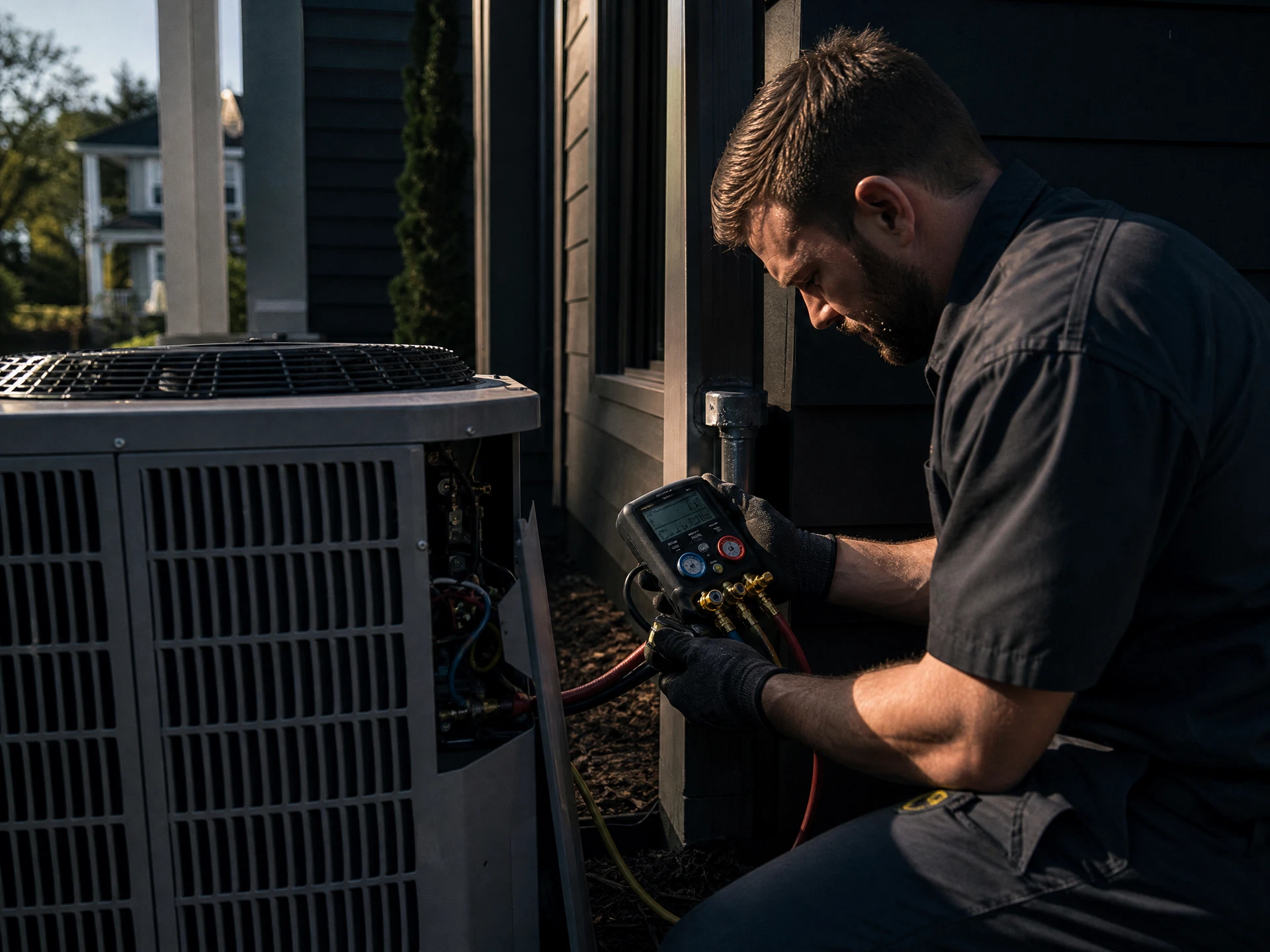
South Carolina summers punish an oversized system. It short cycles, never runs long enough to pull humidity out of the air, and leaves you with a cold clammy house and a high bill. We run a load calculation before quoting equipment and we inspect the duct system, because installing a larger unit on undersized leaking ductwork moves the problem instead of solving it. Every install is commissioned with measured static pressure and refrigerant charge, and those numbers go on your paperwork.
Line Items
Sizing and ductwork determine comfort. The badge on the condenser matters far less than most people are told.
Why South Carolina houses feel cold and clammy
Comfort complaints in this state are usually load and airflow problems wearing an equipment costume. An oversized system satisfies the thermostat in a short burst and shuts off before it has run long enough to pull moisture out of the air, so you end up at 72 degrees and 65 percent humidity. The instinct to install something bigger makes it worse.
What We Find Most Often
Equipment sized by replacement
The new unit is sized to match the old one, which was itself sized by guess. Nobody has ever run a load calculation on the house.
Oversizing causing short cycles
Short run times mean the coil never reaches its most effective dehumidifying state, and moisture on the coil re-evaporates into the house when the blower runs on.
Undersized returns
Starved return air raises static pressure, cuts capacity, shortens equipment life, and leaves rooms far from the air handler never quite cooling.
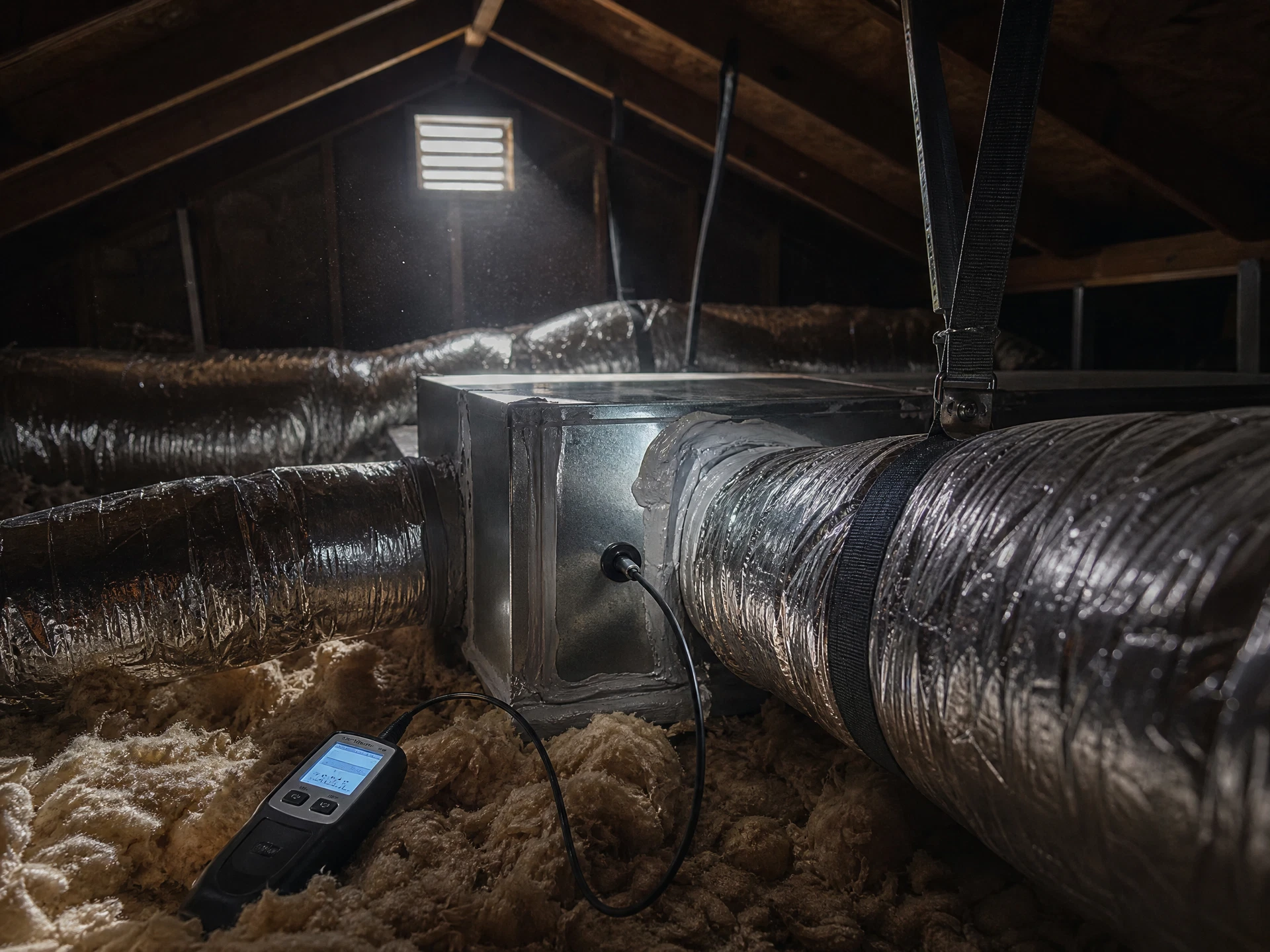
Leaking attic ductwork
We routinely measure duct systems losing 20 to 30 percent of their airflow into a 130 degree attic, which also pulls humid attic air back into the system.
How a HVAC project runs
Every stage is documented. You are never guessing what happened on a day you were not home.
Diagnose before quoting
We measure static pressure, check refrigerant charge, inspect the duct system, and confirm what the house is actually doing before recommending equipment.
Manual J load calculation
The system is sized to your house, its insulation, its windows, and its orientation, rather than to whatever was there before.
Duct evaluation and design
Returns and supplies are checked against the required airflow. If the ducts are the problem, we tell you that, even when it means a smaller sale than new equipment.
Written scope and options
Equipment, efficiency, staging, and duct work priced as separate line items so you can see exactly what each part of the comfort improvement costs.
Installation and duct correction
Equipment set and connected, duct repairs and resizing completed, and the system sealed so measured airflow matches the design.
Commissioning with measurements
Static pressure, temperature split, and refrigerant charge measured and recorded on your paperwork. An install without measurements is an installation nobody verified.
Controls and follow-up
Thermostat configured for dehumidification behavior rather than factory defaults, and we follow up after the first hot stretch to confirm the house is performing.
Equipment and configurations
For humidity control in this climate, staging and variable speed matter more than a higher efficiency rating on a single-stage unit.
Variable speed heat pump
Runs long cycles at low capacity, which is the single most effective configuration for humidity control in South Carolina. Highest cost and the biggest comfort difference.
Two-stage system
A middle path that runs at reduced capacity most of the time and delivers much of the dehumidification benefit at a lower cost than variable speed.
Single-stage heat pump
Lowest first cost and perfectly serviceable when correctly sized. Sizing discipline matters most with this configuration because it has no low gear.
Gas furnace with AC
Appropriate where natural gas is available and winter comfort is a priority. Cooling side sizing follows the same rules regardless.
Mini split zoning
For additions, bonus rooms, and spaces the existing ductwork was never designed to serve. Often cheaper than reworking the whole duct system.
Whole-house dehumidifier
The right answer in a tight, well insulated home where the latent load genuinely exceeds what correct sizing alone can handle.
What determines the price of HVAC work
Equipment is only part of an HVAC number, and frequently not the part that decides whether the house is comfortable. These are the variables worth understanding before you compare quotes.
Why We Do Not List Prices
A price on a website is a guess about a house nobody has looked at. We would rather tell you what moves the number, then measure your house and put a fixed figure in writing. The assessment is free and there is no obligation attached to it.
What Moves Your Number
- 01
- Correct size comes from a room-by-room calculation, not from matching the old unit. An oversized system short cycles, never pulls humidity out, and costs more up front.
- 02
- These are distinct price tiers. In our humidity, longer run times at lower capacity control moisture far better, which is what most people actually mean by comfortable.
- 03
- Leaking or undersized ductwork defeats good equipment. Duct correction is often the better value than a bigger unit, and it is the most common item missing from a cheap quote.
- 04
- Sealing and repairing existing runs costs considerably less than a full replacement. Which one you need is determined by inspection, not by assumption.
- 05
- Some Upstate homes need dedicated dehumidification rather than more cooling capacity. This is an added cost that solves a problem more air conditioning will not.
- 06
- Multi-story homes and additions frequently need zoning or a mini split rather than one larger system. Layout drives this, not preference.
- 07
- Measured static pressure, verified refrigerant charge, and recorded temperature split are what confirm the install performs. Quotes that omit commissioning omit real labor.
Equipment capacity from a load calculation
Single-stage, two-stage, or variable speed
Duct condition, and whether it is addressed
Whether ducts need repair or replacement
Humidity control requirements
Home layout and zoning needs
Whether commissioning is included
Your written scope carries a fixed line-item price. If something is not on the scope, it is not in the price, and we tell you that before you sign.
What is included, and what is not
Included In Scope
- Manual J load calculation
- Static pressure and airflow measurement
- Duct system inspection and leakage assessment
- Equipment removal and disposal
- New line set or flush as conditions require
- Condensate management and safety switch
- Electrical connection and disconnect to code
- Commissioning with recorded measurements
- Thermostat setup configured for humidity control
- Manufacturer warranty registration
Not Included
- Duct replacement beyond the stated scope, quoted as a separate line item
- Electrical service or panel upgrades, if required
- Attic insulation and air sealing, which we will recommend when it matters more than equipment
- Asbestos or hazardous material abatement in older systems
- Structural or framing modification for equipment access
Exclusions are listed on your written scope with pricing attached where they are likely to come up, so a discovery is never a negotiation.
Accountability
Workmanship
Written, transferable
Equipment
Manufacturer, registered by us
Commissioning
Measurements documented
Emergency Response
Available for our installs
HVAC questions we get asked
If your question is not here, ask it on the intake form below and we will answer it directly rather than sending a brochure.
Should I just buy a bigger unit?
No. Oversizing is the most common cause of the humid, clammy house we get called about. Bigger equipment produces shorter run cycles, and short cycling is precisely what prevents the system from removing moisture.
How do I know if my ductwork is the problem?
Measured static pressure tells us in a few minutes. High static pressure means the blower is fighting the duct system, which caps capacity no matter what equipment is attached to it. We measure before quoting rather than after.
How long should my system last in South Carolina?
Twelve to eighteen years is typical here, with the low end common on oversized systems that short cycle constantly and on units never given a filter change. Correct sizing and airflow extend equipment life as much as any maintenance plan.
Is a high SEER rating worth paying for?
Only after sizing and ductwork are right. A high efficiency unit on a leaking, undersized duct system will not deliver its rated performance, so we sequence the fixes in the order that actually returns comfort per dollar.
Roofing
Replacement, repair, storm response
02Exteriors
Siding, trim, soffit, gutters
03Windows
Replacement, glass upgrades, flashing
04Solar & Batteries
Panels, storage, and roof integration
06Standby Generators
Whole-home backup, installed and tested
07Custom Home Building
New homes built on your lot
08Remodeling & Additions
Kitchens, baths, additions, renovation
HVAC assessment request
Comfort complaints are diagnostic. Tell us exactly what the house is doing and which rooms are doing it.
No Heat Or No Cooling
Do not use this form if the system is down. Call the number and say it is urgent, especially in July or a hard freeze.
(864) 593-8773Get it looked at
before it spreads.
Tell us what the house is doing and we will come look at it. The assessment is free, the findings come to you in writing, and there is no obligation attached to either one.