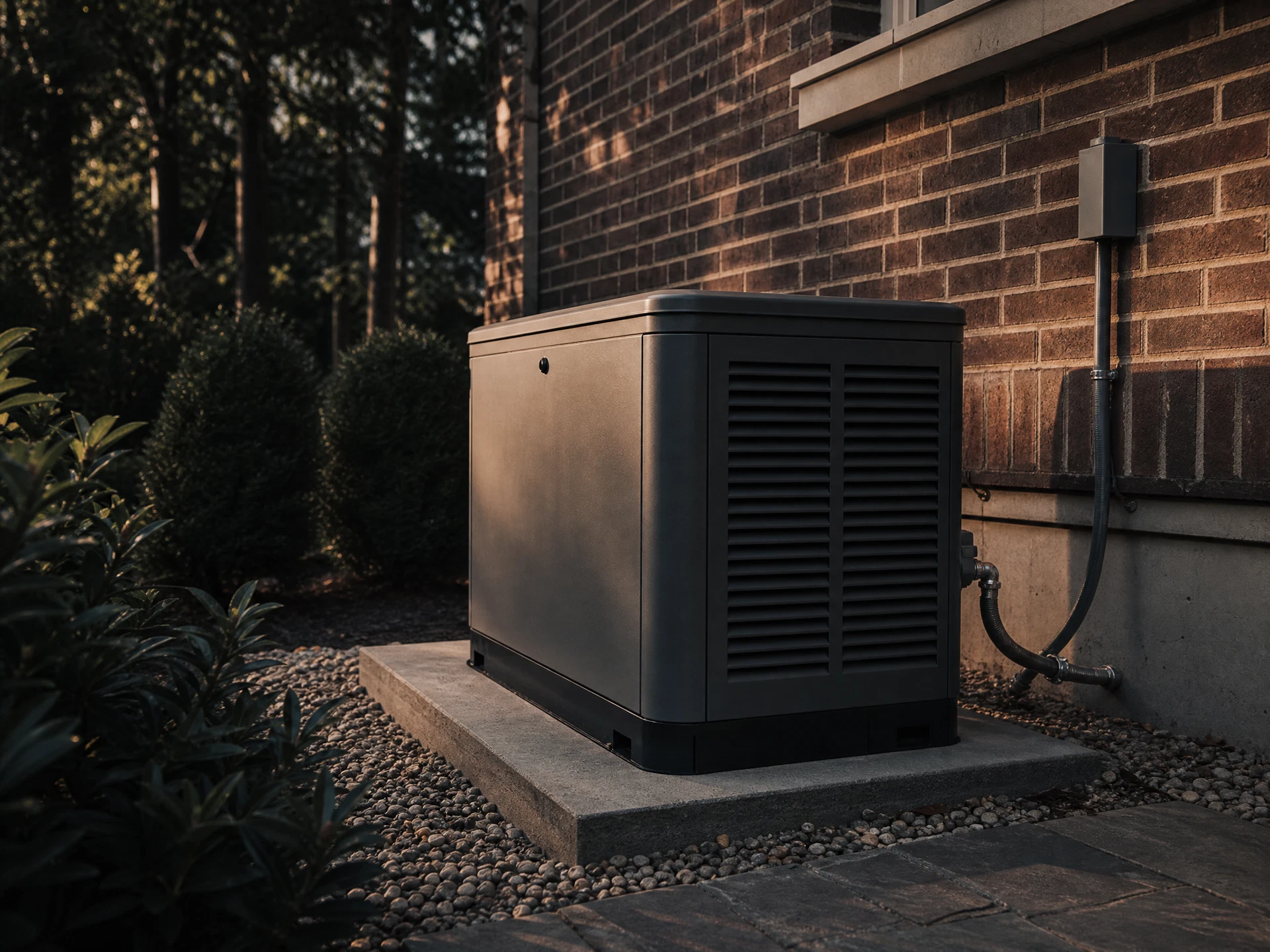
Standby Generators
Permanently installed standby generators sized to the circuits you need, wired through an automatic transfer switch and load tested before we leave.
What we do and how
Quick Answer
Sentinel Home Solutions is a veteran owned contractor providing standby generator installation services across the South Carolina Upstate from its base in 151 Glenwood Ln, Gray Court, SC 29645. Permanently installed standby generators sized to the circuits you need, wired through an automatic transfer switch and load tested before we leave. Typical duration is 1 – 3 days, work is quoted from a written line-item scope, and the initial site assessment is free.
A generator that has never been load tested is a guess. We size the unit against a measured load rather than the square footage of the house, set it on a level pad far enough from windows and vents to satisfy code and your neighbors, and wire it through a transfer switch so it starts and takes over without anyone standing in the rain flipping breakers. Then we run it under actual load, verify the transfer and the return to utility power, and show you the numbers. Because we also do HVAC and electrical work for battery systems, we know what your air handler and well pump actually draw on startup, which is the detail that determines whether a generator carries your house or trips trying.
Line Items
We size generators against a measured load, not a square-foot chart, and we run the unit under real load before we call it done.
Why backup power disappoints
Most generator complaints are not equipment failures. They are sizing and commissioning failures. A unit picked from a chart, wired to a switch nobody tested, and left to sit for two years will not carry the house on the night it matters. Backup power is a system, and the system has to be proven under load.
What We Find Most Often
Sized off square footage
Houses do not draw power by area. A well pump, an air handler, and a electric water heater have startup surges that a chart-sized unit will trip on.
Never load tested
An installer who starts the unit for thirty seconds has verified that it runs, not that it can carry your house. Those are different facts.
Fuel line undersized
A gas line that feeds a furnace will not necessarily feed a generator at full demand. Undersized supply shows up as low fuel pressure faults under load.
Placed wherever was convenient
Set too close to a window, a vent, or a property line, and the install is a code violation and a noise complaint waiting to happen.
How a standby generator installation project runs
Every stage is documented. You are never guessing what happened on a day you were not home.
Load evaluation
We inventory what has to run and what the startup surges are, particularly the air handler, well pump, and any electric heat. That list drives the size, not the house's square footage.
Fuel and service review
We verify your gas meter capacity or propane tank size can actually feed the unit at full demand, and we check whether the electrical service and panel can accept the transfer equipment.
Placement and code clearances
Location is set for required clearances from windows, doors, vents, and property lines, with noise and prevailing wind considered rather than ignored.
Written scope and permits
Fixed price with the unit, transfer switch, pad, fuel work, and electrical spelled out. Electrical permits pulled and utility coordination handled before anything ships.
Pad, set, and fuel connection
Level pad set, unit anchored, fuel line run and pressure tested, and a sediment trap and shutoff installed where they belong.
Transfer switch and wiring
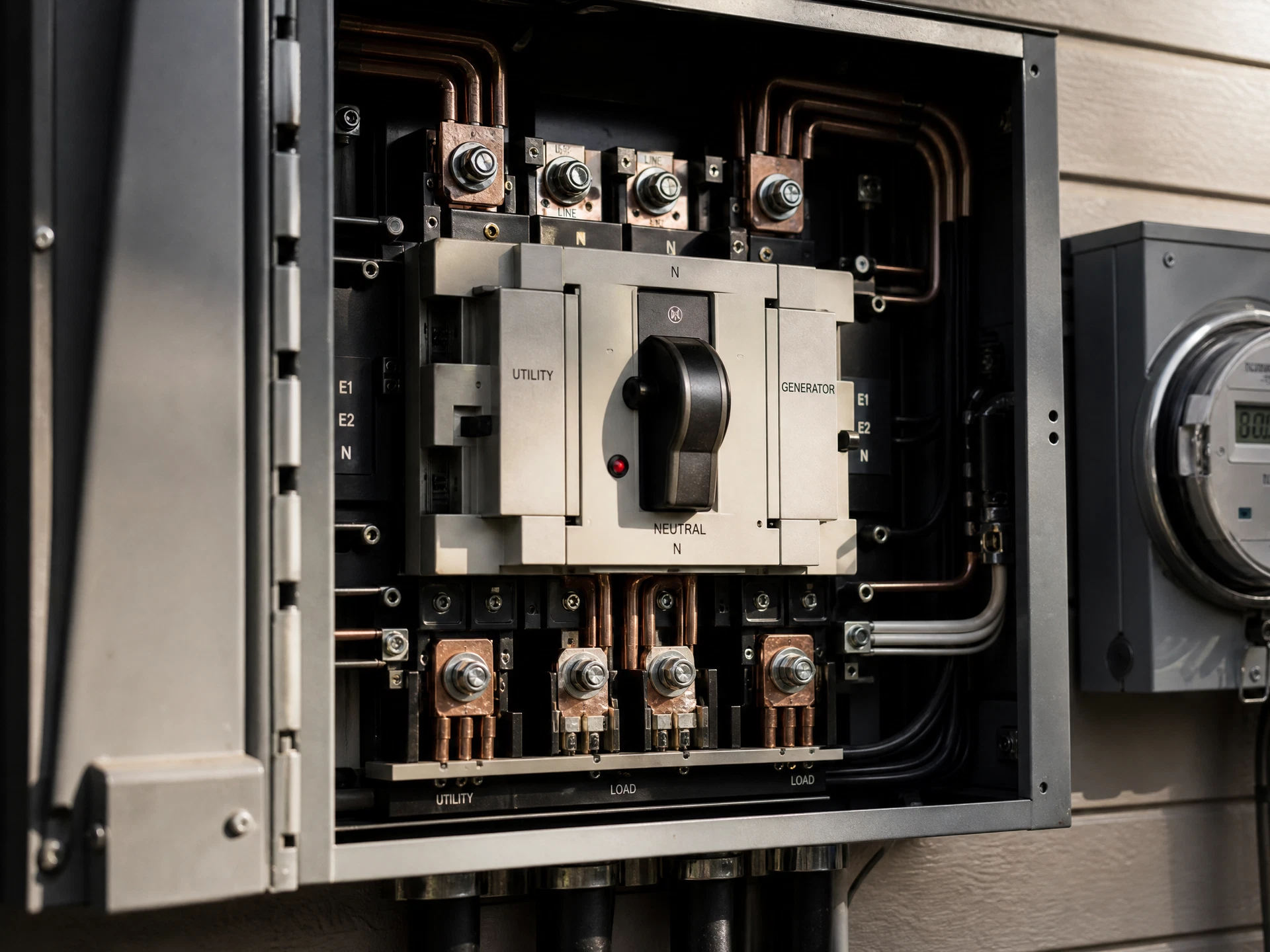
Automatic transfer switch installed and wired, either whole-home or feeding a critical load panel, with every circuit labeled so you know exactly what runs.
Startup and load test
Commissioned per the manufacturer, then run under actual load. We simulate a utility outage, verify transfer time and the return to utility power, and record the numbers.
Walkthrough and monitoring
We show you the exercise schedule, what the alerts mean, and how to read the monitoring app, then hand over registration and warranty paperwork organized in one place.
Backup configurations
The right configuration depends on how much of the house has to stay live and what your fuel supply can support. We price the options side by side rather than quoting one and hoping.
Critical circuits, air-cooled
Typically 10 to 14 kW feeding a critical load panel: refrigeration, lighting, outlets, internet, well pump, and one HVAC system. The most common install in the Upstate.
Whole-home, air-cooled
Typically 18 to 26 kW covering the full panel with load management to shed non-essential circuits when demand peaks. No thinking required during an outage.
Whole-home, liquid-cooled
Typically 30 kW and up, with a longer service life and quieter operation under sustained load. The right answer for large homes and long outages.
Generator with battery storage
A battery covers the instant transfer and the quiet overnight hours, and the generator handles multi-day outages and heavy loads. The two complement each other rather than compete.
Portable inlet and interlock
A manual inlet box and panel interlock so a portable generator can feed selected circuits safely. Far cheaper than standby, and it requires you to be home.
What determines the price of a standby generator
Generator pricing is driven far more by the installation than by the unit itself. A quote that names only a model number is not a complete quote.
Why We Do Not List Prices
A price on a website is a guess about a house nobody has looked at. We would rather tell you what moves the number, then measure your house and put a fixed figure in writing. The assessment is free and there is no obligation attached to it.
What Moves Your Number
- 01
- Backing up a few critical circuits versus the entire house is the single largest cost decision. We start by asking what must work during an outage, not what size unit you want.
- 02
- Correct sizing accounts for the surge when an air conditioner or well pump starts, not just running watts. Sizing from square footage is how units end up undersized.
- 03
- Larger whole-home loads require a liquid-cooled unit, which is a substantially different price tier with a longer service life and quieter operation.
- 04
- Long conduit and gas runs mean trenching, larger wire, and correct pipe sizing. Placement is often the difference between two quotes on the same generator.
- 05
- Natural gas may require a meter upgrade to supply the demand, and propane requires a tank sized for realistic runtime. Either can be a meaningful line item.
- 06
- A whole-home automatic transfer switch, a service-rated switch, and a critical load subpanel are different pieces of equipment with different labor.
- 07
- An older panel or service may need upgrading first, and permitting plus utility coordination is real work. Both should appear in writing, not as an afterthought.
- 08
- A standby generator is an engine that must be exercised and serviced annually. Factoring the maintenance plan into the decision is more honest than pretending it is install-and-forget.
What you need to keep running
Measured load, including startup surge
Air-cooled versus liquid-cooled
Distance from the unit to the panel and fuel
Fuel type and supply capacity
Transfer switch type
Electrical service condition and permits
Ongoing maintenance
Your written scope carries a fixed line-item price. If something is not on the scope, it is not in the price, and we tell you that before you sign.
What is included, and what is not
Included In Scope
- Measured load evaluation and sizing calculation
- Fuel supply capacity verification before quoting
- Code clearance review for placement
- Electrical permitting and inspection coordination
- Level pad set and unit anchoring
- Fuel line run, sediment trap, shutoff, and pressure test
- Automatic transfer switch with labeled circuits
- Manufacturer startup and commissioning
- Load test with recorded transfer numbers
- Monitoring setup and homeowner walkthrough
- Warranty registration handled for you
Not Included
- Propane tank supply and fuel delivery contracts
- Gas meter upsizing performed by the utility
- Electrical service upgrades, quoted separately if required
- Trenching through finished hardscape or driveways, quoted per site
- Landscaping or screening around the unit, unless specified
- Fuel consumed during extended outages
Exclusions are listed on your written scope with pricing attached where they are likely to come up, so a discovery is never a negotiation.
Accountability
Workmanship
Written, first year
Equipment
Manufacturer, up to 5 years
Commissioning
Load test documented
Service
Annual plan available
Standby Generators questions we get asked
If your question is not here, ask it on the intake form below and we will answer it directly rather than sending a brochure.
What size generator do I need for my house?
It depends on what has to run, not on square footage. A critical circuit setup covering refrigeration, lighting, outlets, internet, a well pump, and one HVAC system is usually 10 to 14 kW. Covering an entire panel typically takes 18 to 26 kW, and larger or all-electric homes go to liquid-cooled units at 30 kW and up. We build the number from your actual loads and startup surges, including the air handler and well pump, because those surges are what trip an undersized unit.
Should I get a generator or a battery?
A battery transfers instantly, runs silently, and handles a few hours to a day depending on how it is sized. A generator handles multi-day outages and heavy loads like air conditioning as long as fuel holds. If your outages are short and frequent, a battery is often the better experience. If they are long, or you are on a well, a generator is the more dependable answer. Together they cover both cases, and we will price either honestly rather than pushing the larger ticket.
Natural gas or propane?
Natural gas is preferable when it is available at your address, because you never think about refueling. Propane works anywhere and is the standard answer in rural parts of the Upstate, but tank size determines runtime, and a 250 gallon tank runs a mid-size unit for roughly two to four days under normal cycling. We verify your gas meter capacity or tank size can feed the unit at full demand before we quote, because undersized fuel supply is the most common reason a correctly sized generator faults under load.
Do standby generators require maintenance?
Yes. They self-exercise weekly, and they need an annual service with oil, filters, plugs, valve inspection, and a battery check. The starting battery is the single most common failure point, and it typically lasts two to three years. We offer an annual plan, and we would rather you keep the unit serviced by anyone competent than let it sit until it fails on the night you need it.
Roofing
Replacement, repair, storm response
02Exteriors
Siding, trim, soffit, gutters
03Windows
Replacement, glass upgrades, flashing
04Solar & Batteries
Panels, storage, and roof integration
05HVAC
Install, replace, service, maintain
07Custom Home Building
New homes built on your lot
08Remodeling & Additions
Kitchens, baths, additions, renovation
Standby generator assessment request
Sizing depends on what has to keep running and what your fuel supply can feed. The more of this you can answer, the closer the number we can give you.
Existing Generator Will Not Start
If you have a standby unit that failed or is throwing a fault, call instead. Most no-start calls are the starting battery, and that is a same-visit fix.
(864) 593-8773Get it looked at
before it spreads.
Tell us what the house is doing and we will come look at it. The assessment is free, the findings come to you in writing, and there is no obligation attached to either one.